

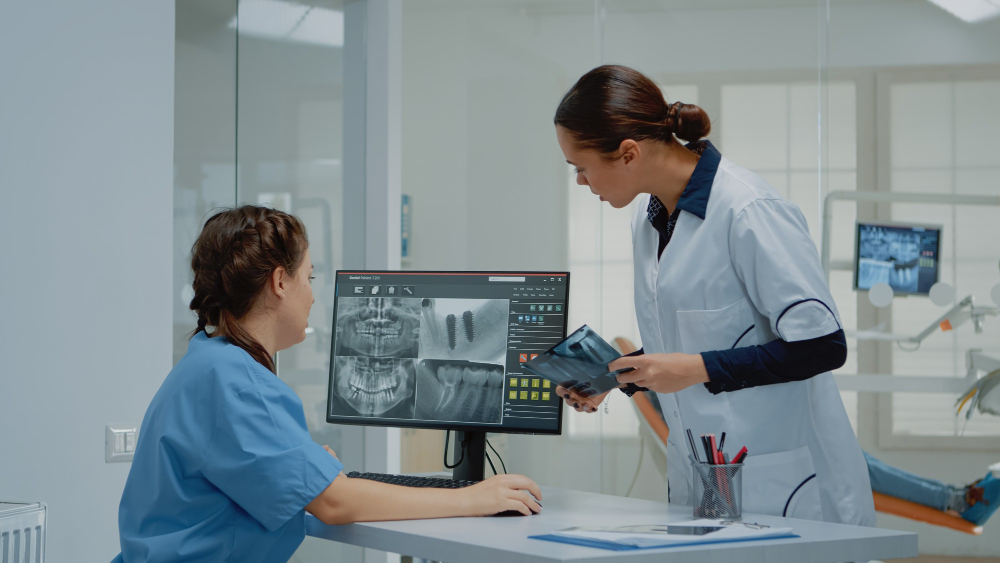
What Are CBCT and Dental OPG?
Today, many dentists use advanced dental X-rays to see inside your mouth. CBCT & Dental OPG are two common types of dental imaging. CBCT stands for Cone Beam Computed Tomography. It creates a 3D picture of your teeth, jaw, and nearby areas. Dental OPG, or Orthopantomogram, is a special X-ray. It gives a wide view of your upper and lower jaws in one image. Both scans help dentists find problems and plan treatments. For example, they can spot hidden teeth or bone changes. According to the World Health Organization, dental X-rays are safe when used properly.
How Do CBCT and Dental OPG Work?
CBCT dental imaging uses a cone-shaped X-ray beam. First, you sit or stand still. Then, the machine moves around your head. It takes many pictures from different angles. After that, a computer combines these images into a 3D view. On the other hand, a dental OPG scan uses a rotating arm. This arm moves around your jaw to capture a single panoramic image. As a result, your dentist can see your whole mouth in one picture. Both methods are quick and painless.
Common Reasons for CBCT and Dental OPG Scans
Often, dentists order CBCT or dental OPG scans for several reasons. These include:
Sometimes, your dentist may use these scans before surgery. This helps make treatment safer and more accurate.
Benefits of Advanced Dental Imaging
Advanced dental imaging, like CBCT and dental OPG, offers many benefits. For instance, these scans give clear and detailed pictures. Because of this, dentists can spot problems early. In addition, CBCT dental imaging shows bone, nerves, and teeth in 3D. This helps dentists plan treatments more precisely. Dental OPG scans are fast and cover your whole mouth at once. As a result, you spend less time in the dental chair. According to peer-reviewed dental journals, these tools improve diagnosis and care.
Risks and Safety Considerations
While CBCT and dental OPG scans use X-rays, the amount is low. The Centers for Disease Control and Prevention states that dental X-rays are safe for most people. However, dentists only order these scans when needed. Pregnant women should tell their dentist before any X-ray. In most cases, a lead apron protects your body from extra radiation. Still, it is important to follow your dentist’s advice for safety.
What to Expect During the Procedure
During a CBCT dental imaging scan, you may sit or stand. The machine will circle your head for a few seconds. You must stay still to get a clear image. For a dental OPG scan, you bite gently on a small piece to keep your mouth steady. The machine moves around your jaw and takes a single picture. Both scans are quick and do not hurt. Afterward, you can return to your normal routine right away.
How to Prepare for Your Scan
Before your CBCT or dental OPG scan, your dentist will give you instructions. Usually, you do not need to fast or change your routine. However, you should remove jewelry, glasses, or metal objects from your head and neck. Sometimes, you may need to wear a lead apron for extra safety. If you are pregnant or think you might be, tell your dentist before the scan. This helps your care team choose the safest option for you.
Frequently Asked Questions
Consult Dr. Shivani Bhargava for personalised treatment and dental care, consult our experts today.